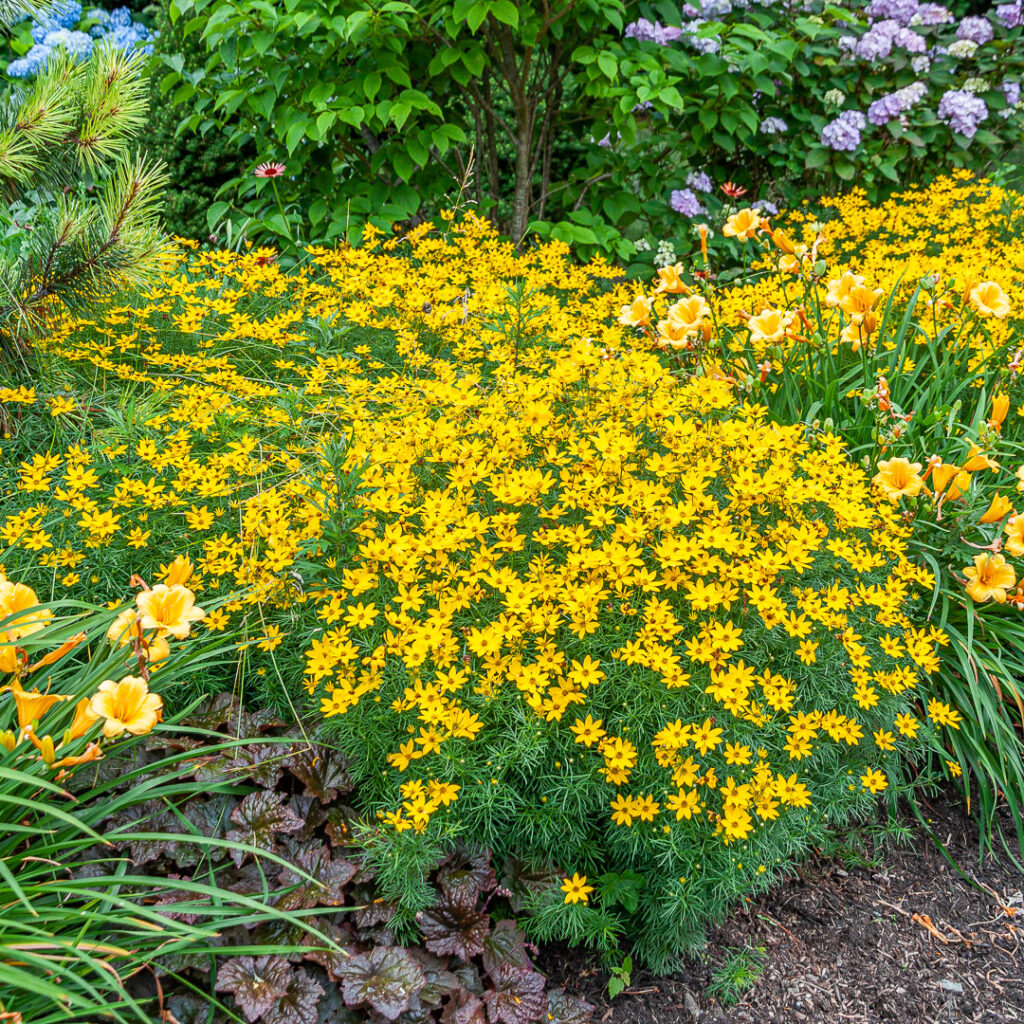
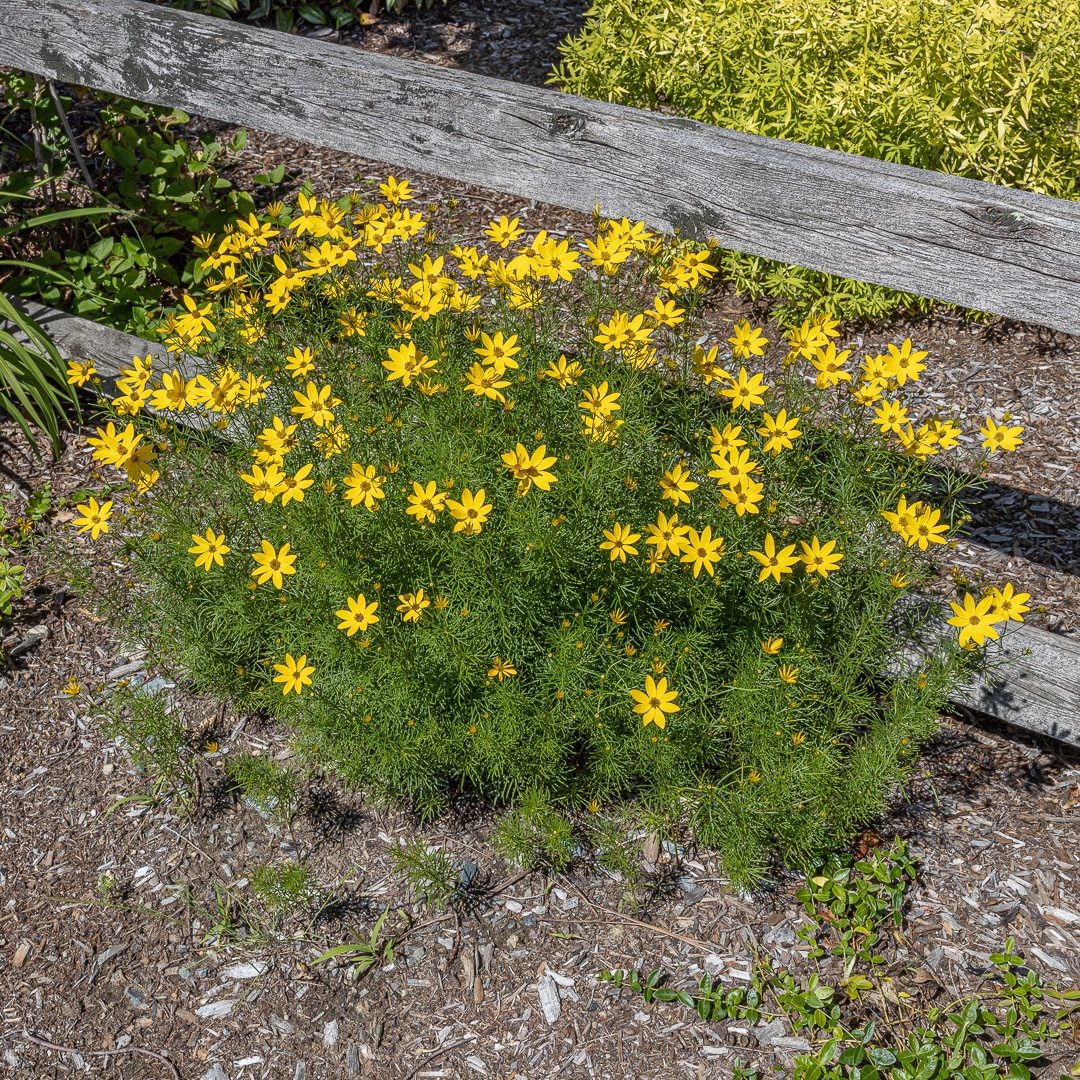
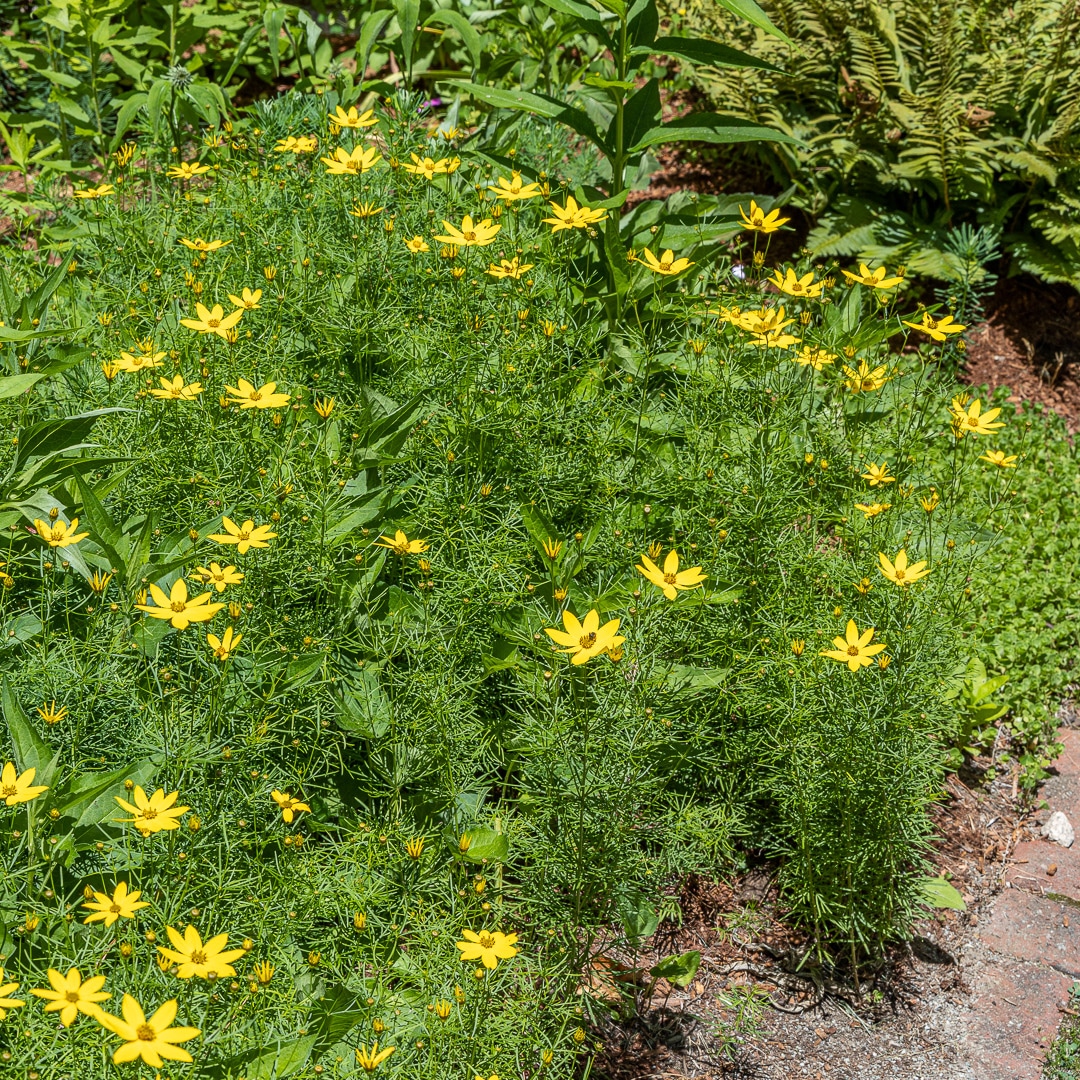
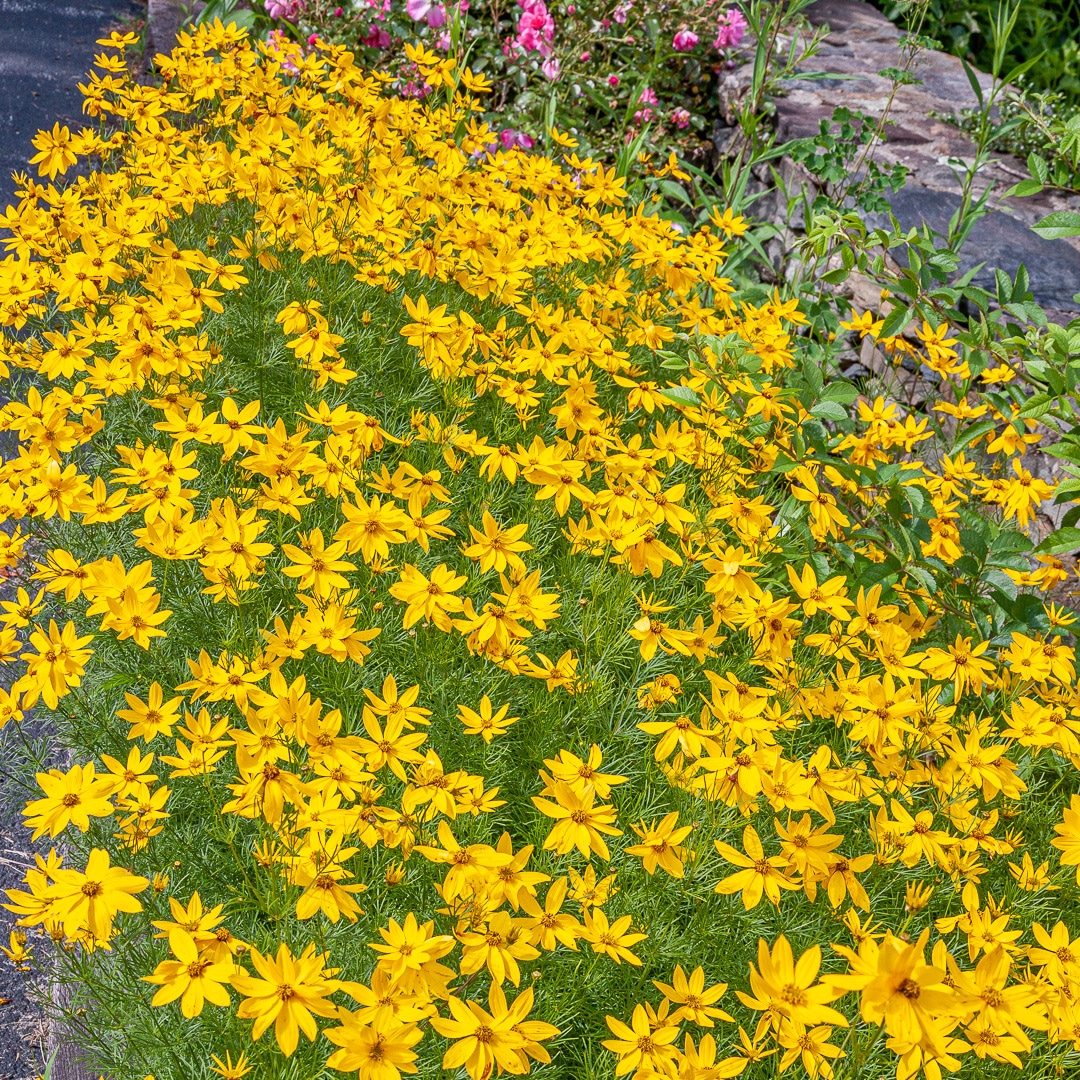
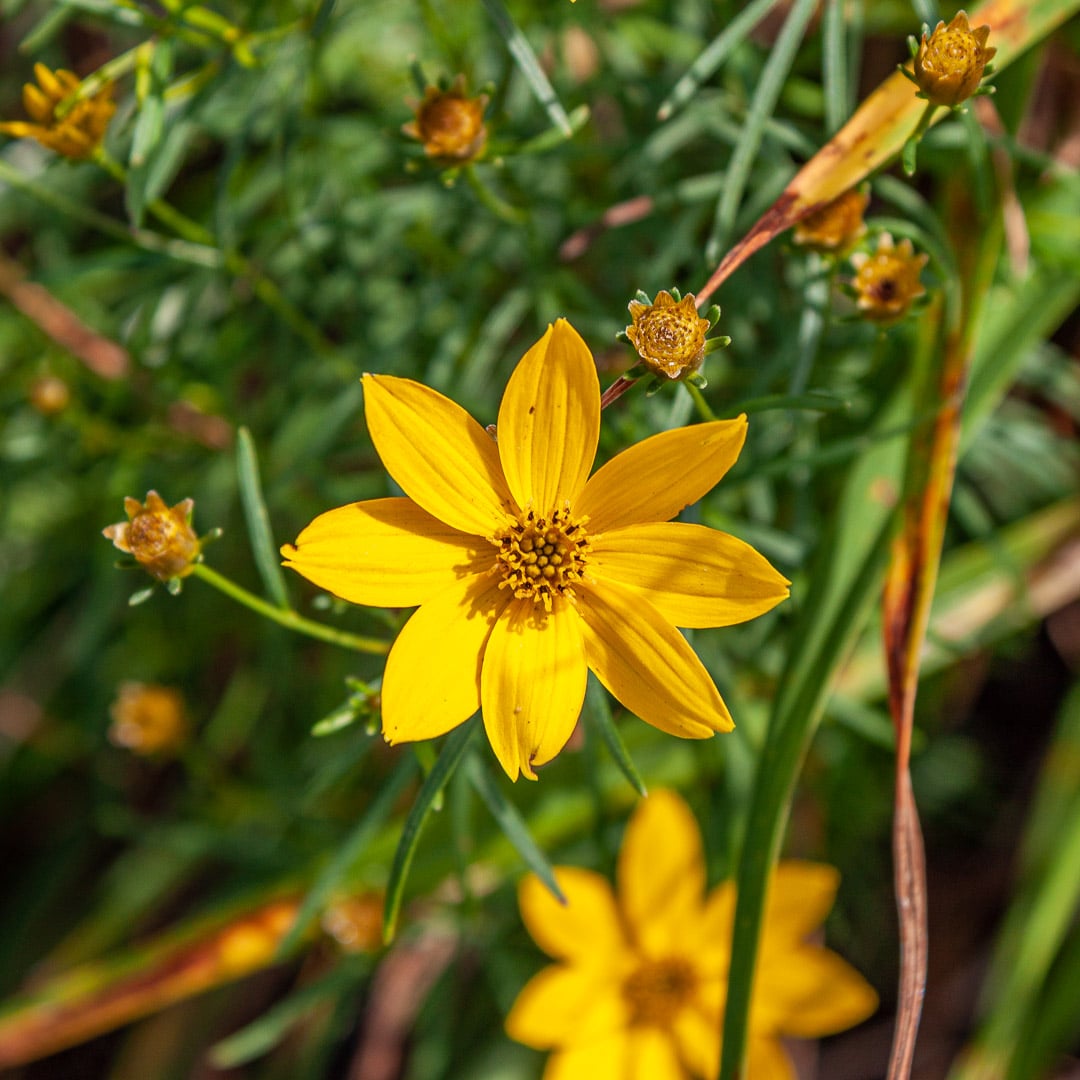
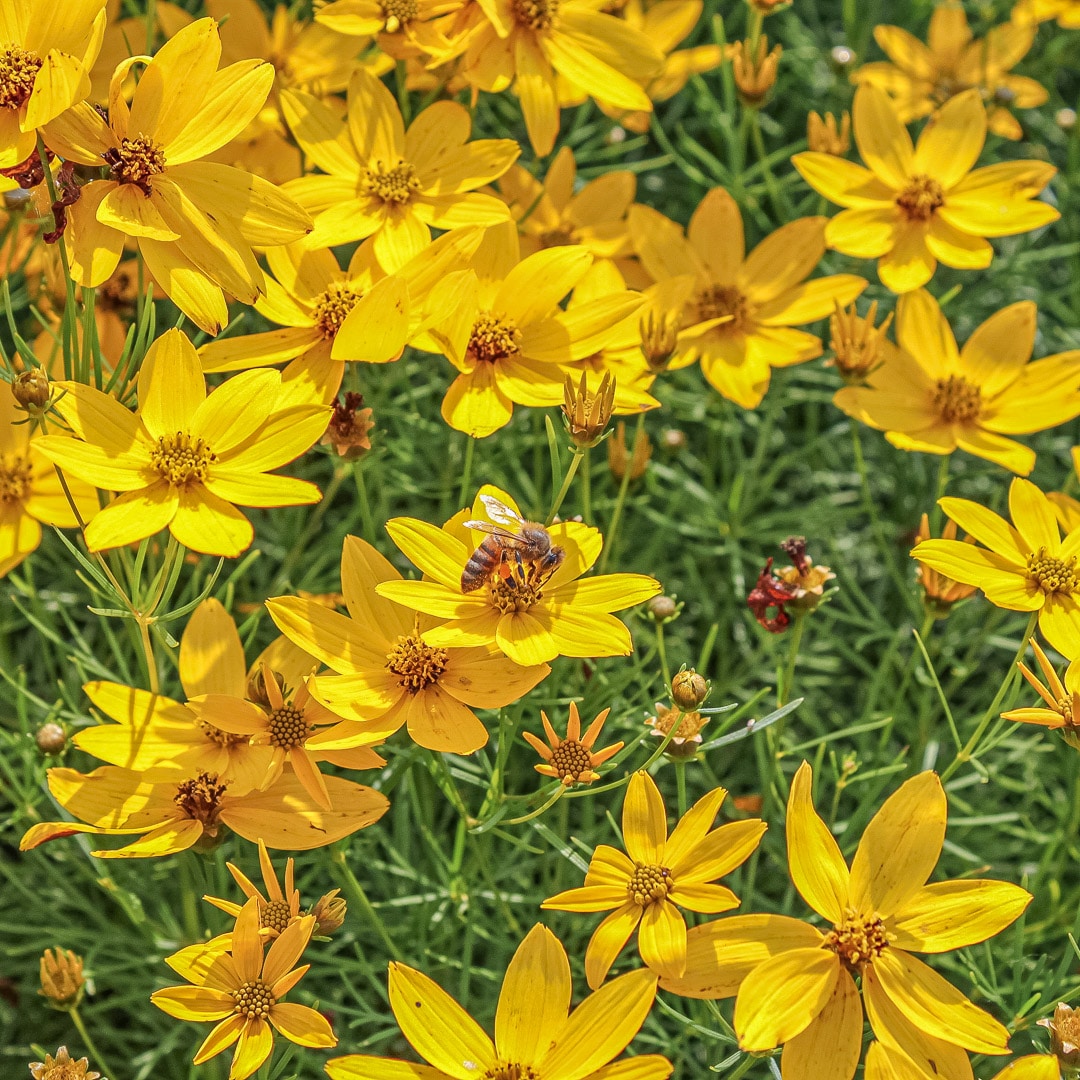
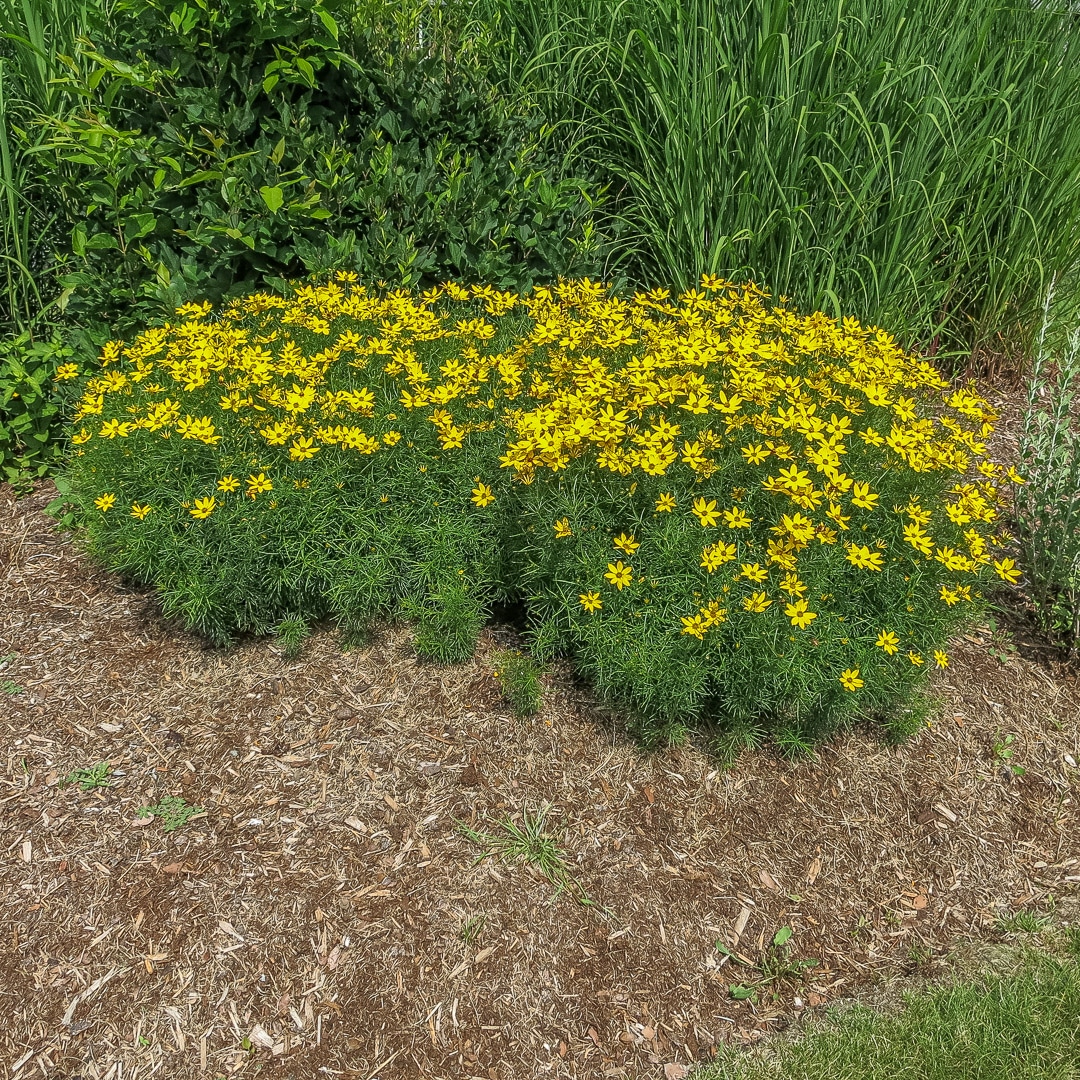
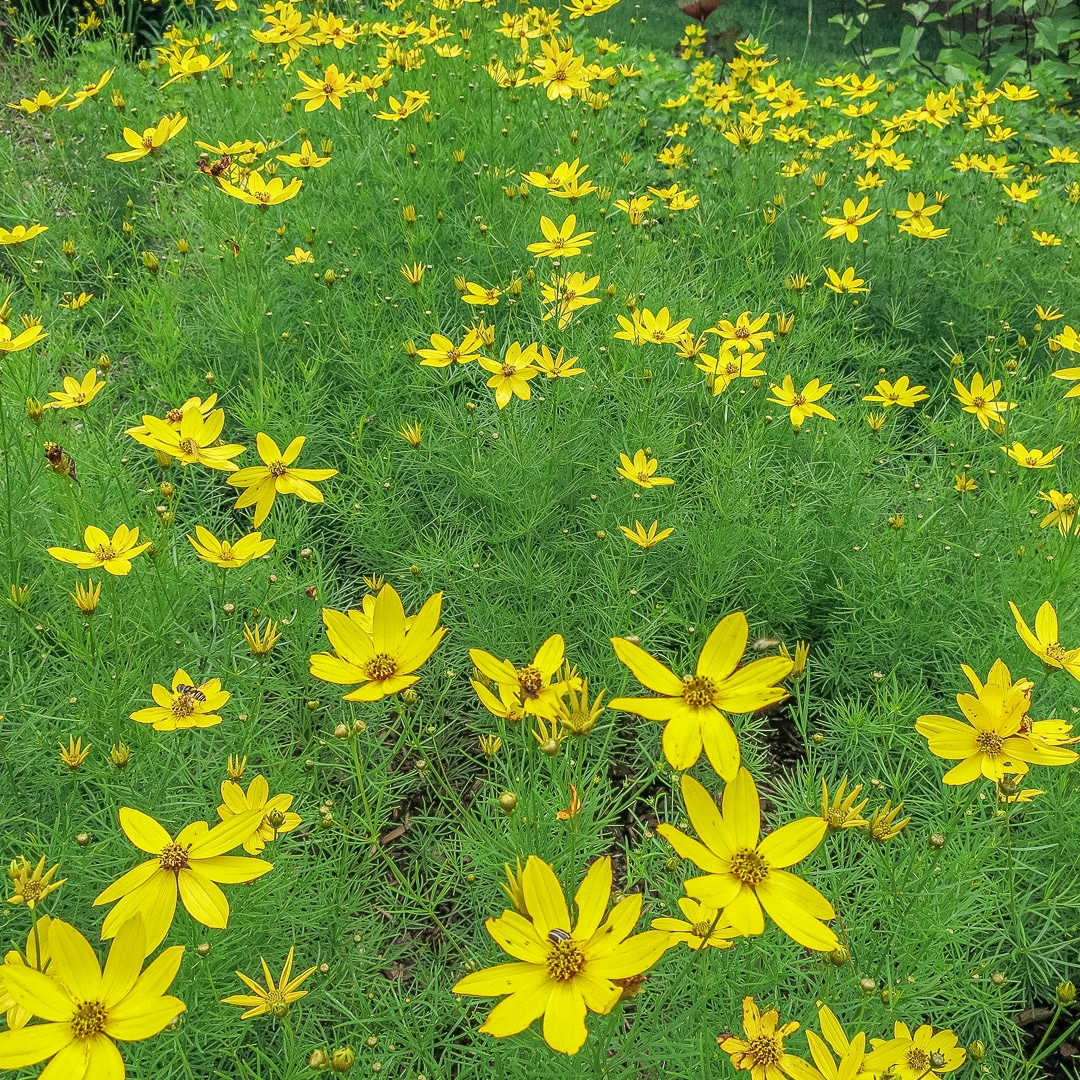
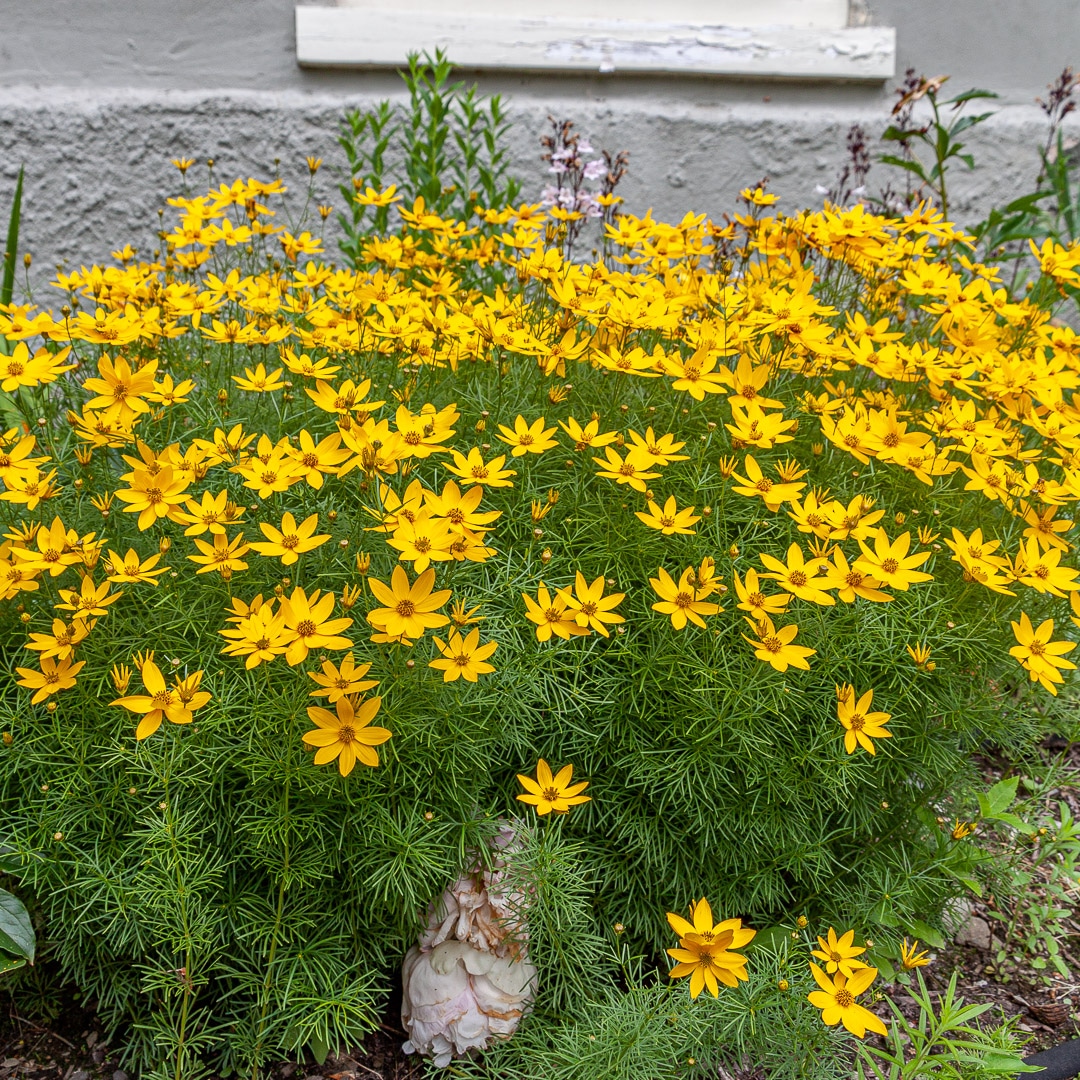
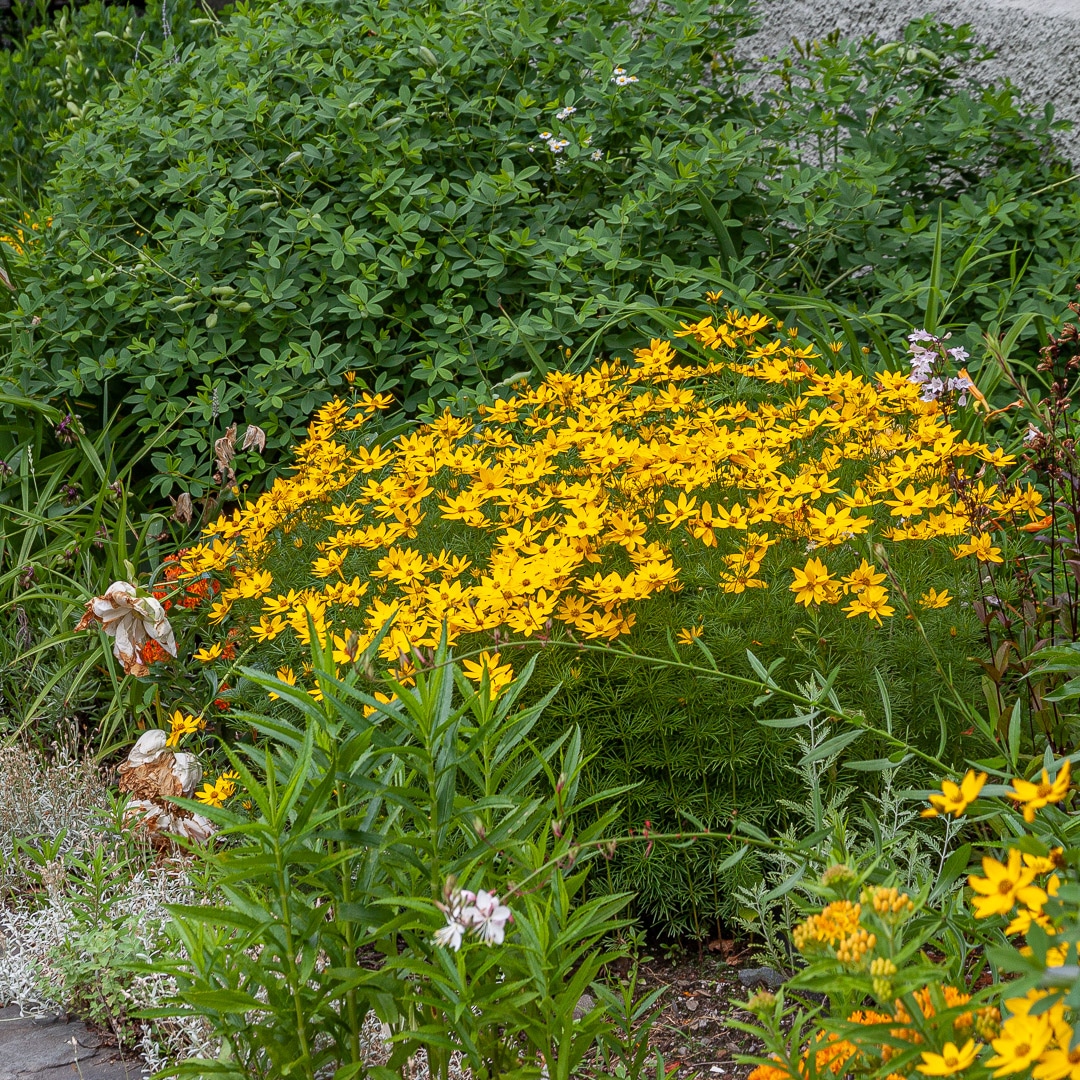
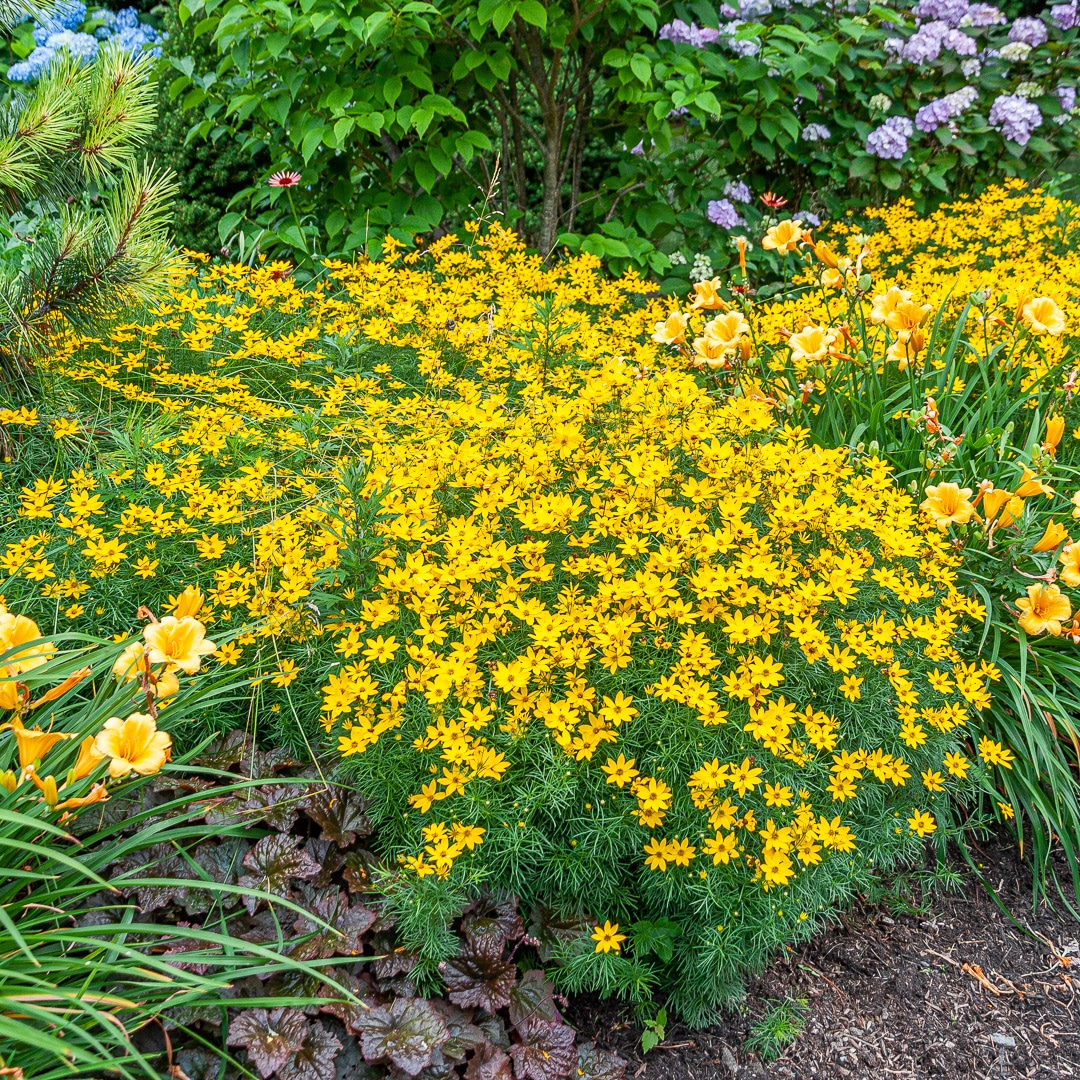
Threadleaf coreopsis or tickseed (Coreopsis verticillata) is a fine-leaved flowering perennial that has tons of great varieties to choose from. It is a terrific plant for perennial gardens and massing. Most varieties grow 1-2 feet high and spread 1-2 feet or more. Coreopsis has a long bloom period when deadheaded and, in some ways, blooms more like an annual than a perennial. Coreopsis does best in full sun but can handle part sun. In full sun, it blooms more profusely and grows more densely. Likes moist, well-drained soils but is drought tolerant once established and does poorly in overly moist soils.
Tickseed spreads via rhizomes and self seeds so it can get a bit pushy in a perennial garden. Plan on keeping it in check as needed. Even with the extra work it offers such a great bloom period and fine textured foliage that its hard to pass up if you have part to full sun available.
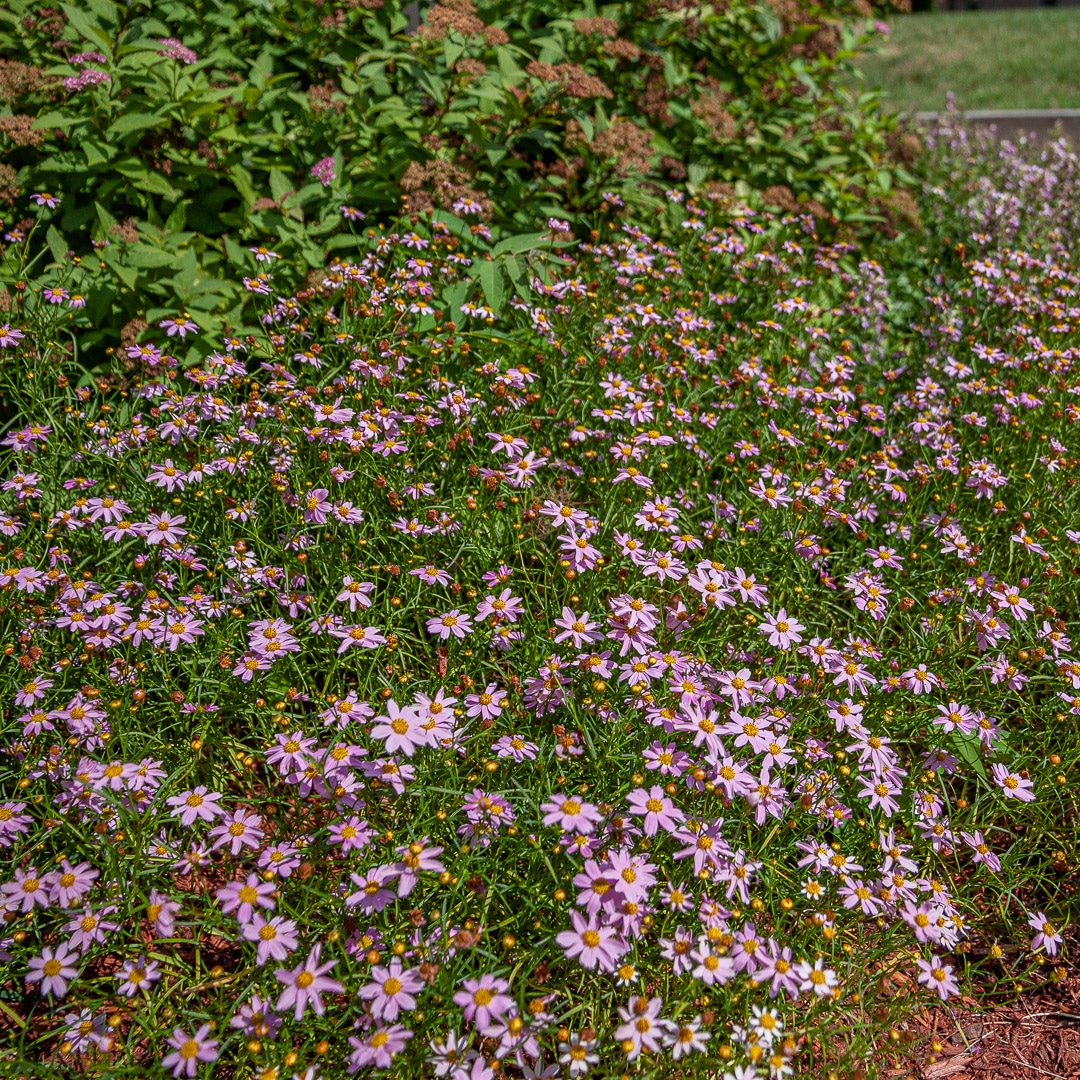
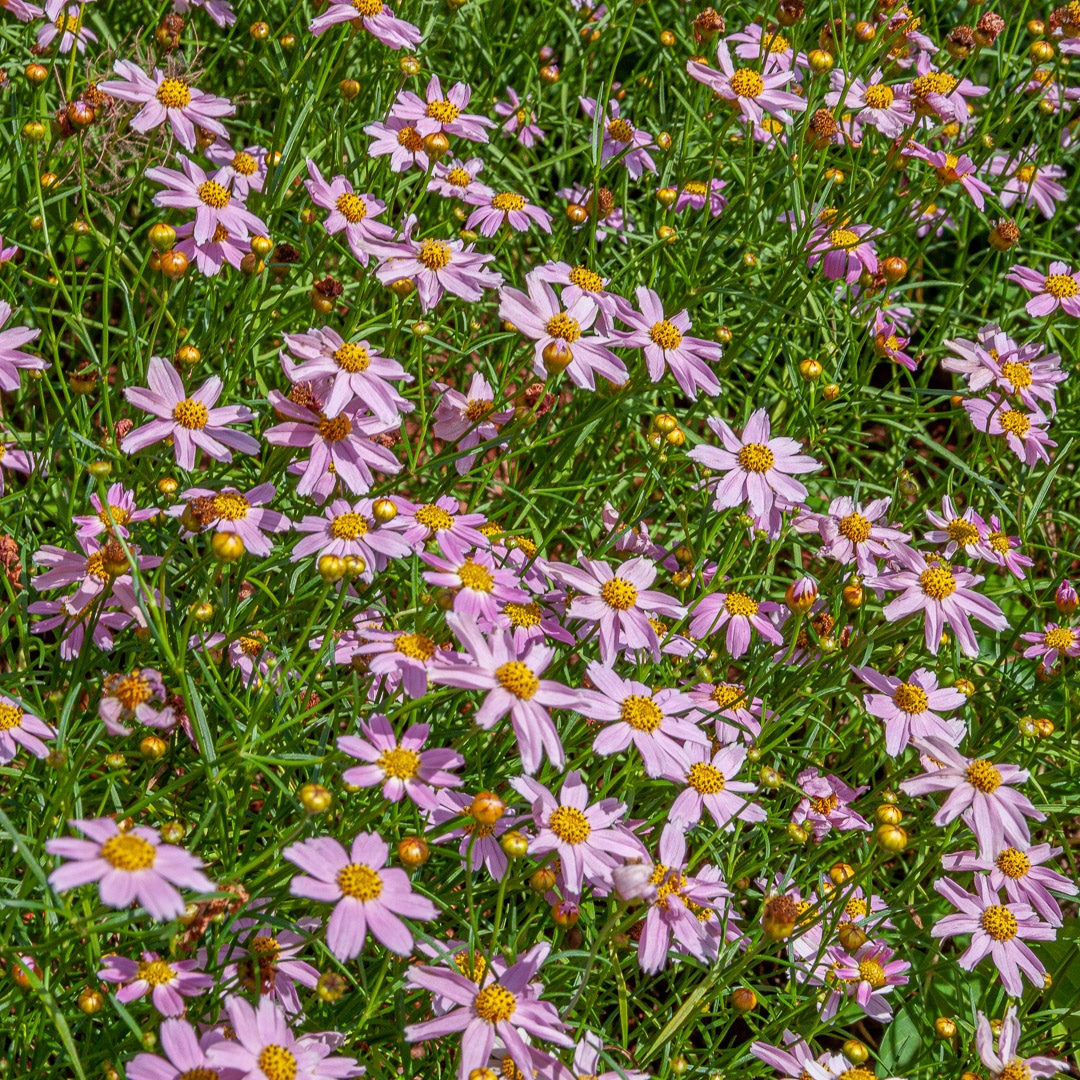
Notable varieties: ‘Moonbeam’ is a lovely light yellow variety that is especially beautiful. ‘Zagreb’ which is a shorter growing variety and there is a great pink variety Coreopsis rosea (Pink Tickseed).
| Key Details | |
|---|---|
| Common Name: | Threadleaf coreopsis or tickseed |
| Botanical Name: | Coreopsis verticillata |
| Plant Type: | Perennial |
| Plant Description: | Late spring/Summer blooming perennial with fine featherry foliage that is a fast spreader and has a season long bloom period. |
| Height: | 1’-2’ |
| Spread: | 2’-3’ |
| Foliage: | green fine feathery texture. |
| Flower: | Single layer of smooth petals surrounding a small yellow centers. |
| Bloom Time: | June to September |
| Site Conditions | |
| Climate: | Zones 3-9 |
| Soil Type: | Loamy. Moist well-drained soils are best. |
| Soil pH: | 5.5-6.5 |
| Soil Nutrients: | Low |
| Sun: | Full sun to part sun |
| Specific Conditions: | Deer resistant |
| Style | |
| Style Considerations: | Nice dense spreading habit. Massing and grouping are great options. Fine texture foliage and a long bloom period. Great for massing. |
| Maintenance | |
| Watering: | Watering weeklyif needed is typically best. Can handle some drought conditions. |
| Mulching: | Not required but always helps especially if you need to add organic matter to the soil. |
| Fertilizing: | Not needed if you have healthy humus-rich soil with plenty of organic matter. |
| Weeding: | Does a great job at stifling weeds due to its dense mound like foliage that keeps most weeds from getting through. |
| Deadheading: | Deadhead individual spent flowers to prevent it from going to seed and to rebloom. |
| Staking: | Rarely needed |
| Dividing: | Yes, in early spring as they emerge or early fall |
| Transplanting: | Early spring when they start to appear or early fall is best but anytime works with sufficient watering. |
| Pruning: | See deadheading |
| Pests: | If planted in the right conditions it has few pests. |
| Winterizing: | Cut back any stems that remain 2-3 inches above the ground after the first hard frost or two (when the ground freezes). You can also use straw or pile some leaves over the plants. |